
International Logistics
NO.1 Are Shipping Rates Starting to Decline? Multiple Shipping Companies Adjust Rates
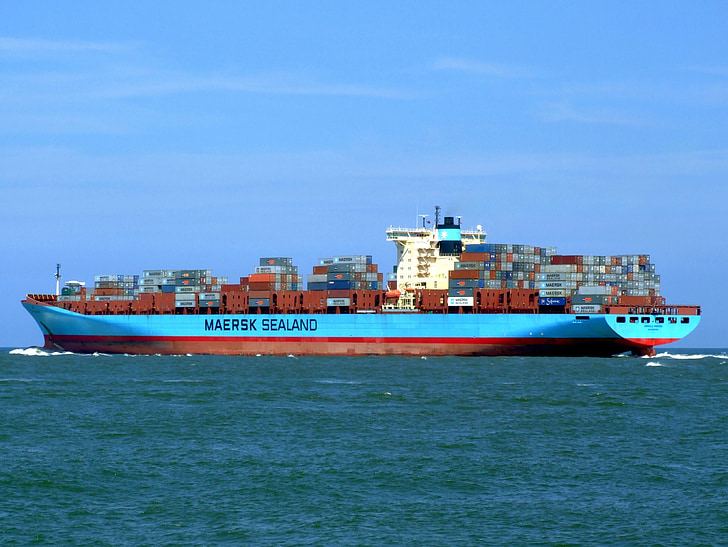
The container shipping rate increase originally scheduled for July 1st has triggered a market price drop due to Mediterranean Shipping Company (MSC) maintaining the original price on the US West Coast line, with most companies already reducing rates. The rate increase on the US East Coast line has been basically implemented, but there is a possibility of a decrease in the future. MSC announced that the rates will be maintained until the end of July, providing a breather for shippers. At the same time, the stagnation in European lines has declined, and the congestion at the port of Singapore has improved, with global port congestion expected to ease as the peak season arrives early and shipping capacity increases.
Industry insiders analyze that MSC's pricing strategy on the US West Coast line has significantly affected the overall market rate trend. In addition, since June, the increase in overtime ships and new routes in the US West region, along with the expected continuous increase in shipping capacity this month, has gradually eased the originally tight cabin situation, further promoting the downward trend of shipping rates.
NO.2 Air Freight Prices "Unexpectedly Strong" During the Traditional Low Season
According to data released by WorldACD today, the global cargo transportation volume in the first week of July grew by 11% year-on-year. The global spot and contract average price in the 27th week was $2.57 per kilogram, up 2% from the previous week, about 68% higher than the same period last year.
Meanwhile, the Loadstar reported today that the door-to-door transportation service price from Guangzhou to Nigeria is as high as $9.80 per kilogram for 99 kilograms and below, and $8.50 per kilogram for over 99 kilograms.
Metro Shipping stated to its customers: "In the off-season of the year, the market still maintains a surprisingly strong momentum, as additional belly capacity is put into use in the summer, reflecting the continued strength of e-commerce activities." (The Loadstar)
NO.3 Shenzhen Airport Further Densifies Two Cargo Routes
Recently, Shenzhen Airport has successively densified the all-cargo aircraft cargo routes to Ho Chi Minh City, Vietnam, and Frankfurt, Germany. This further broadens the aviation logistics main channel to the two major trade partners, ASEAN and the EU. To date, there are 30 all-cargo aircraft cargo airlines operating in Shenzhen.
NO.4 Guangzhou China-Europe Railway Express Cross-Border E-Commerce Center Starts Operation
On July 3, the X8168 train loaded with electronic products, daily necessities, light industrial products and other goods left the Zengcheng Railway Logistics Park of the Guangzhou Railway Logistics Center, heading for Hamburg, Germany via the Horgos port, marking the official operation of the Guangzhou China-Europe Railway Express Cross-Border E-Commerce Center.
The establishment and operation of the Guangzhou China-Europe Railway Express Cross-Border E-Commerce Center has broken the previous pattern of the Zengcheng Railway Logistics Park's China-Europe Railway Express only handling bulk export goods. It has brought together cross-border e-commerce small commodities in the park's e-commerce center for sorting, inspection, and quarantine. The export declaration and customs clearance have been moved forward to the Guangzhou China-Europe Railway Express Cross-Border E-Commerce Center, and the cross-border e-commerce trains departing from the Zengcheng Railway Logistics Park can directly transport e-commerce goods from the Guangdong-Hong Kong-Macao Greater Bay Area to Central and Western Europe, improving customs efficiency and reducing logistics costs. (China News Network)
NO.5 Global Warehouse Robotics Market Continues to Grow
According to the latest data from SkyQuest, the global warehouse robotics market size reached $5.39 billion in 2022 and is expected to grow at a compound annual growth rate of 13.2% from $6.10 billion in 2023 to $16.45 billion in 2031. The rapid development of warehouse robotics technology benefits from labor shortages, an urgent demand for efficient warehouse solutions, and the prosperity of the e-commerce industry. The market is segmented by type, function, payload capacity, industry, and region, showing a diversified development trend. In the next few years, the warehouse robotics market will continue to maintain strong growth, bringing intelligent and efficient transformation to the logistics industry. (Yi En Network)
NO.6 US Port Terminals Face Threat of Labor Strikes
Dockworkers at ports along the US East Coast and the Gulf of Mexico warn that the possibility of a strike is increasing as the year progresses. The chairman of the International Longshoremen's Association stated that there is no time left for the union to reach an agreement with maritime employers before the labor contract expires on September 30th. The union suspended negotiations in June, protesting the use of automated machines, claiming this violated previous labor agreements. If this issue is not resolved and a labor agreement is not reached by October 1st, union members will go on strike. If a strike occurs at that time, it will coincide with the influx of goods into the US before the holidays and threaten the US economy on the eve of the presidential election.
NO.7 Technavio Report Shows Global Express Market to Grow by $165 Billion in Next 4 Years
According to a recent report by the British technology and market consulting firm Technavio, it is expected that the global express market (CEP) will grow by $165 billion between 2024 and 2028, especially as the increasing number of market free trade agreements in emerging economies will also promote the growth of the express market.
The report analyzes some trends in the express market. More than half of the surveyed online users said that price is still a key factor for consumers choosing express services. Both domestic and international freight volumes are on the rise, especially the volume of goods for e-commerce and B2B transactions.
The report also points out the challenges faced by the express market. The entry of some start-ups and merged companies has intensified market competition. These new entrants use technology and attractive freight rates to gain a market advantage. Due to challenges in digital development and labor training, the express industry still needs to develop technology in areas such as robotics and information and communication technology. Another major challenge facing the industry's development is the growing demand for faster delivery, especially in the field of e-commerce.
Market Trends
NO.8 High-Tech Sector Becomes an Important Growth Pole for Future Global Trade
The United Nations Conference on Trade and Development (UNCTAD) released the latest report "Global Trade Dynamics," pointing out that international trade has recovered in the first quarter of this year.
The high-tech sector has become an important growth pole. The trade growth rate varies significantly among different types of goods, with the trade growth of green energy and artificial intelligence products being particularly prominent. Taking high-performance servers as an example, which serve as the foundation for computing power, their trade volume in the first quarter of this year grew by more than 25% year-on-year, significantly higher than the trade growth rate of less than 10% for other types of computing and storage hardware, showing the strong momentum of new technological changes in driving trade demand.
The UNCTAD report predicts that the demand for electric vehicles, solar panels, batteries, high-end semiconductors, and other products in many countries will further increase, and despite facing policy restrictions from some countries, the trade volume growth rate of the above-mentioned products will also significantly exceed the average.
NO.9 Over 21 Trillion Yuan, China's Foreign Trade Grows by 6.1% in the First Half of the Year
On July 12, the General Administration of Customs released China's 2024 first half-year foreign trade "report card." According to customs statistics, the total value of China's goods trade import and export in the first half of the year was 21.17 trillion yuan, a year-on-year increase of 6.1%, with the trade scale reaching a new high and the quarterly trend continuing to improve. Among them, exports were 12.13 trillion yuan, a year-on-year increase of 6.9%; imports were 9.04 trillion yuan, a year-on-year increase of 5.2%; the trade surplus was 3.09 trillion yuan, an expansion of 12%.
NO.10 First Quarter Dutch E-commerce Market Online Spending Grew by 3% Year-on-Year
On July 15, according to the market research institution GfK's research report on the Dutch e-commerce market, in the first quarter of this year, the total online spending of Dutch consumers broke through the 9 billion euro mark, growing by 3% compared to the same period last year. With the vigorous development of the cross-border e-commerce market, more and more Dutch cross-border online shoppers are emerging. At the same time, the cross-border online shopping expenditure of Dutch consumers is also continuously rising. Among them, the expenditure of Dutch consumers on Chinese cross-border goods grew particularly rapidly, reaching 102 million euros, a surge of 75.9% from the 58 million euros in the same period last year. (Net Economy Society)
NO.11 Malaysian Inland Revenue Board Announces Mandatory Use of Electronic Invoices for All Business Transactions
The Malaysian Inland Revenue Board (IRBM) announced a major initiative that from August 1, 2024, all business transactions will be mandatorily required to use electronic invoices, aiming to promote transparency and efficiency in B2B, B2C, and B2G sector transactions